
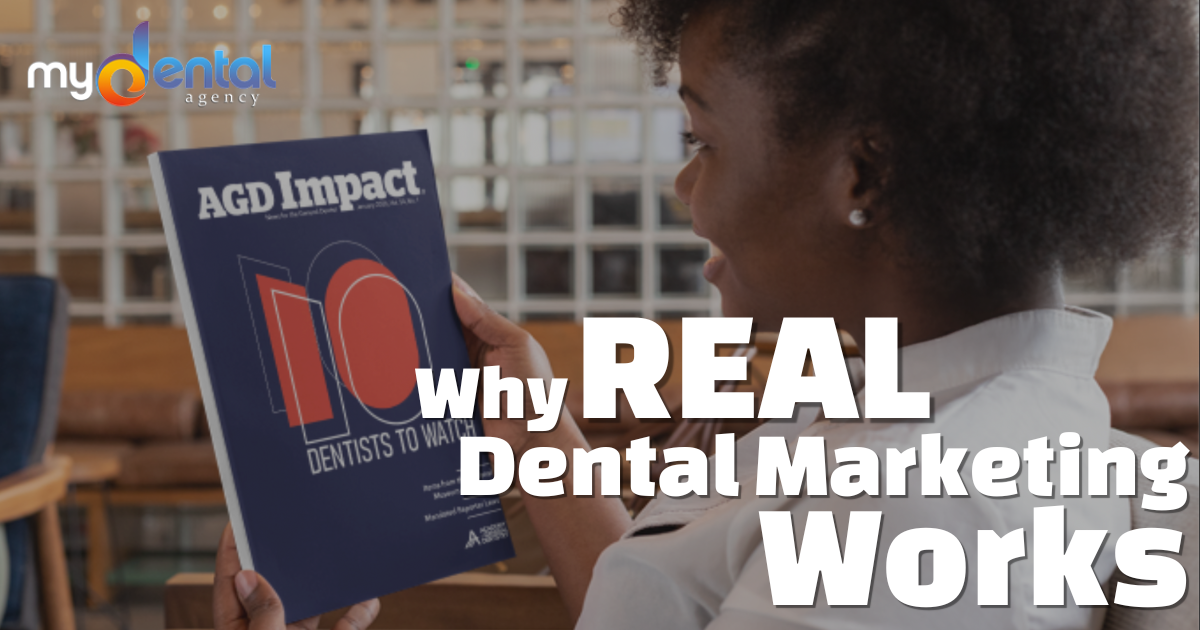
This article originally appeared in the January/2026 issue of the Academy of General Dentistry’s AGD Impact magazine.
How to Win Back Trust in the Age of Ad Blindness
By: Jackie Ulasewich Cullen
The dental industry stands at an interesting juncture in the current marketing landscape. Now more than ever, patients are discerning, informed, and, above all, skeptical. They’re unimpressed by images of flawless smiles on perfect faces. They scroll right past the blatant product pitches. Today’s dental patients crave realness. As we step into a new year, dental practices have an opportunity to ditch their polished-to-perfection personas for a more authentic marketing strategy that will transform reluctant prospects into loyal advocates.
Who Do Patients Trust?
Everywhere we turn, we are bombarded by ads, influencers hawking products, and claims that are clearly too good to be true. The dental industry isn’t immune either, with wannabe dental influencers posting all manner of outlandish content on Instagram, Facebook, and TikTok. How does a legitimate dental professional cut through all the noise? The key isn’t to be louder but to simply be real.
Ad Blindness
With ads appearing just about everywhere we go, from the gas pump to the doctor’s office, many people have become experts at tuning them out. We subconsciously filter out any media that feels too rehearsed or salesy through selective attention to avoid overexposure to content. We call this phenomenon “ad blindness.”
If you’re a dental practice trying to reach potential patients online, ad blindness presents a problem because, historically, dental marketing has relied heavily on highly polished, perfect content. The modern consumer craves relatability and no longer resonates with the unattainable beauty standards of the past. Dental practices that create relatable, authentic content will experience more success in today’s marketplace.
Being Real vs. Posting Reels
The stats from all the major social media platforms are telling us that authentic content outperforms the highly produced ads some practices still employ because patients are more likely to respond when they can connect with the human side of a practice. Think doctor-recorded clips, a casual tone, and behind-the-scenes glimpses, genuine stories told by real people, not actors reciting a script.
Real. Relevant. Relatable.
The basic framework for content that will land with prospective patients should follow the three R’s:
- Real: Post honest, unscripted moments that showcase the practice’s personality
- Relevant: Speak directly to the patient’s situation or concern by answering frequently asked questions or breaking down a common or intimidating treatment
- Relatable: Meet patients where they are by using plain language and minimal jargon
Patient-Led Storytelling Builds Credibility
When a practice highlights its actual patients, those authentic testimonials and transformation videos become the voice of truth in advertising. Nothing conveys the emotional impact of a successful treatment quite like a patient who has just experienced it for themselves. A single genuine story is more powerful than dozens of stock images.
Transparency Breeds Trust
Authenticity in practice is just as important as authenticity in marketing content. Patients appreciate honesty about cost, results, and treatment timelines. Shying away from such topics can provoke skepticism in prospective patients. Instead, we want to promote transparency and integrity by communicating clearly and sincerely, setting realistic expectations, and thus inspiring trust and confidence. A simple phrasing change — “We’ll create a personalized treatment plan that fits your needs,” versus “We offer affordable implants,” for example, will not only shift the focus from price to value but also resonate with higher-quality patients.
The Authentic Marketing Audit
To effectively connect with prospective patients, a dental practice should conduct periodic audits to assess the authenticity of its marketing. An authentic marketing audit isn’t just about looking through the metrics. It’s more about evaluating whether marketing content accurately reflects the practice’s mission and values:
- What kind of impression does the practice’s online presence give?
Evaluate the website, social media, blog, and other online content. Does the language feel human? Or has it started sounding robotic? An authentic presence should speak to patients in relatable language. - Does the practice feature real team members and patients or stock content?
When a patient walks into a practice, they want a familiar face to connect with. Wherever possible, online, use real faces rather than stock images to create a personal look and feel and foster genuine connection. - Do ads overpromise or speak honestly about what’s possible?
It’s tempting to use technical jargon or exaggerated language in marketing to elevate the practice’s image and create a sense of authority. More often than not, that strategy backfires. Patients prefer straightforward language and clear communication. - When was the last time we asked our patients why they chose us?
How often do team members talk to patients about their dental experience beyond a generic survey? Doing so can help you understand which aspects of your practice you need to improve and which ones you need to keep doing.
The Future of Dental Marketing
The future of dental marketing isn’t about being the loudest or flashiest. It’s about authenticity and being genuine. By embracing real stories, connections, and consistency, dental practices can thrive in today’s marketing landscape.